
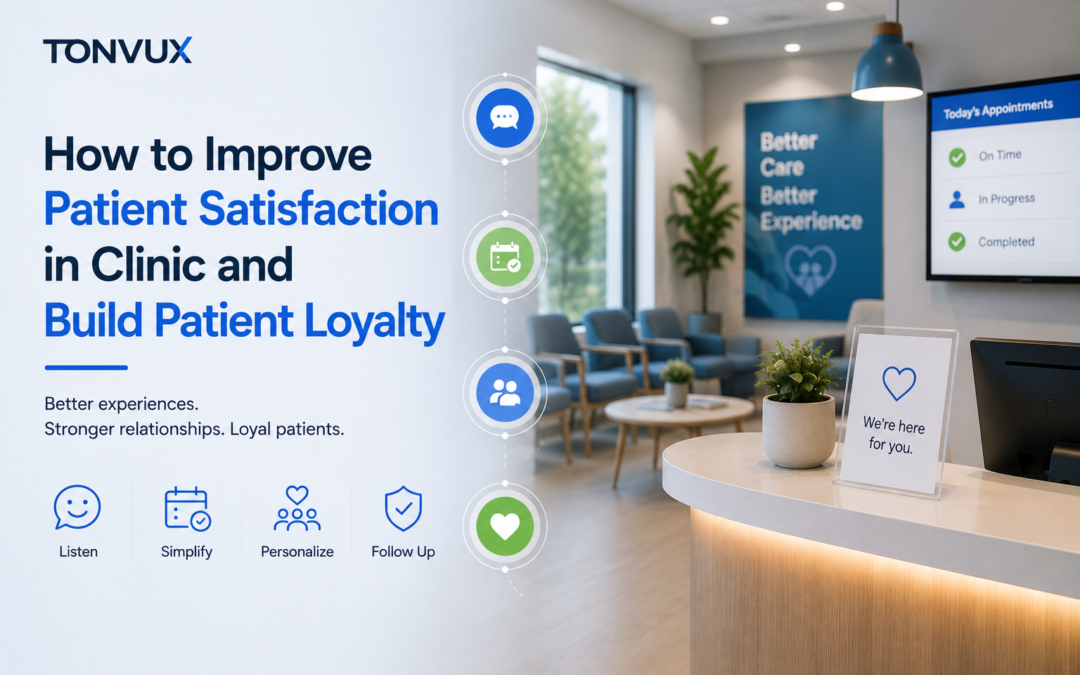
Healthcare Clinic Patient Experience
How to Improve Patient Satisfaction in Clinic and Build Patient Loyalty
Practical strategies for clinics that want clearer communication, easier booking, shorter perceived wait times, and stronger long-term patient loyalty.

Quick Answer
What is the best way to improve patient satisfaction in a clinic?
Clinics can improve patient satisfaction by simplifying appointment booking, reducing unnecessary waiting, communicating clearly, training staff, collecting patient feedback, and using digital tools such as appointment reminders, online forms, and patient communication systems.
Why It Matters
Patient satisfaction affects trust, retention, reviews, and reputation.
Patient satisfaction reflects the full patient journey, not only the clinical care received.
Greater Trust
Clear processes help patients feel supported.
Better Communication
Plain-language updates reduce confusion.
Patient Retention
Positive experiences may encourage return visits.
Stronger Reviews
Satisfied patients may share better feedback.
Patient Journey
What influences patient satisfaction?
Several touchpoints shape how patients feel before, during, and after their appointment. Improving these moments can create a more reliable and respectful clinic experience.
Practical Framework
10 ways to improve patient satisfaction in clinic operations
Make Appointment Booking Simple
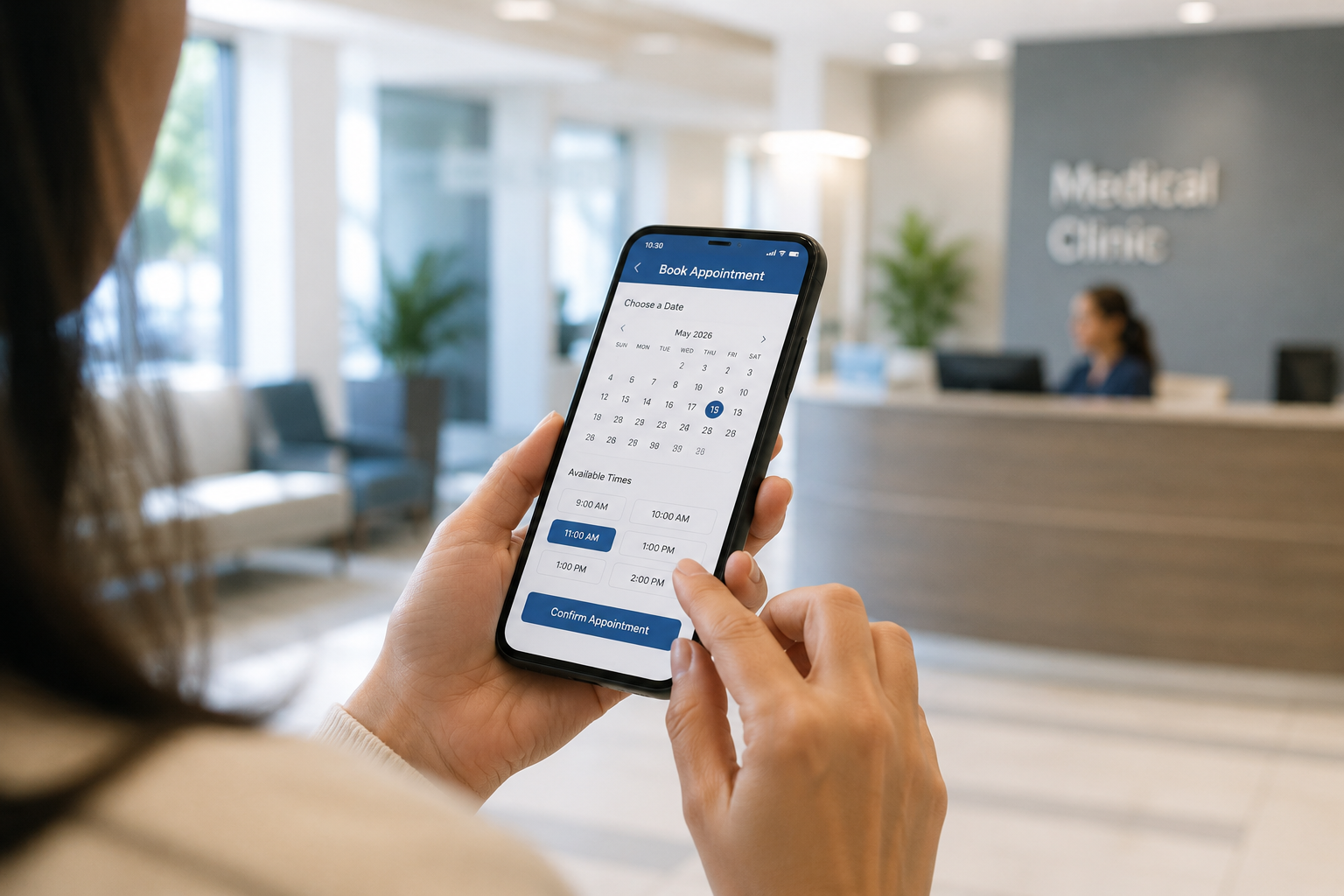
Offer online requests, clear contact details, automated confirmations, and reminders.
Reduce Waiting Time
Set realistic expectations and communicate clearly when delays happen.
Improve Communication
Use plain language, encourage questions, and provide clear next steps.
Improve Front Desk Flow
Reduce paperwork, protect privacy, and make check-in easier.
Use Appointment Reminders
Send SMS, email, or phone reminders before visits.
Keep Patients Updated
Share confirmations, follow-up instructions, and clinic changes.
Collect Feedback
Use surveys, reviews, follow-up emails, and suggestion forms.
Train the Team
Support staff with training in service, empathy, privacy, and professionalism.
Use Digital Tools
Online forms, digital check-in, and communication tools reduce friction.
Build Long-Term Relationships
Consistent follow-up and respectful interactions help patients feel valued.

Digital Convenience
Use digital tools to make the patient journey easier.
Technology can simplify booking, reminders, check-in, electronic paperwork, patient communication, and follow-up. When implemented thoughtfully, digital tools can reduce administrative burden while improving convenience for patients.
Book a DemoPatient Loyalty
The connection between patient satisfaction and patient loyalty
A satisfied patient had a positive experience. A loyal patient is more likely to return, recommend the clinic, leave positive reviews, and continue building a relationship with the healthcare team.
Answer-Ready Entity Statement
Healthcare clinics can build patient loyalty by creating consistent, convenient, respectful, and well-communicated experiences across the full patient journey.
Avoidable Friction
Common mistakes that reduce patient satisfaction
- Long wait times without communication
- Complicated appointment booking
- Limited follow-up communication
- Poor phone responsiveness
- Unclear instructions
- Inconsistent patient experiences
- Lack of online convenience


Measurement
Measure patient satisfaction over time.
Clinics can monitor patient experience using several indicators and use those trends to identify areas for ongoing improvement.
- Patient satisfaction surveys
- Google reviews
- Follow-up questionnaires
- Appointment attendance rates
- Repeat patient visits
- Patient feedback trends
Related Resources
Explore more patient experience resources.
Ready to Improve the Patient Journey?
Build a better patient experience across every touchpoint.
Focus on communication, convenience, efficiency, and continuous improvement to create experiences that encourage patients to return and recommend your clinic.
Book a DemoFAQ
Frequently asked questions
How can clinics improve patient satisfaction?
Clinics can improve patient satisfaction by providing clear communication, reducing unnecessary waiting, simplifying appointment booking, offering appointment reminders, collecting patient feedback, and creating a welcoming environment.
Why is patient satisfaction important?
Patient satisfaction reflects the overall patient experience and may influence trust, patient retention, online reviews, and a clinic's reputation within the community.
Does reducing wait times improve patient satisfaction?
Long waits are commonly associated with patient frustration. Communicating expected wait times and keeping patients informed may improve the overall experience.
How does technology improve patient satisfaction?
Digital tools such as online booking, appointment reminders, digital check-in, and patient communication systems can make accessing healthcare services more convenient.
What is the difference between patient satisfaction and patient loyalty?
Patient satisfaction describes a patient's experience with a specific visit. Patient loyalty refers to a patient's willingness to return and recommend the clinic after consistently positive experiences.