
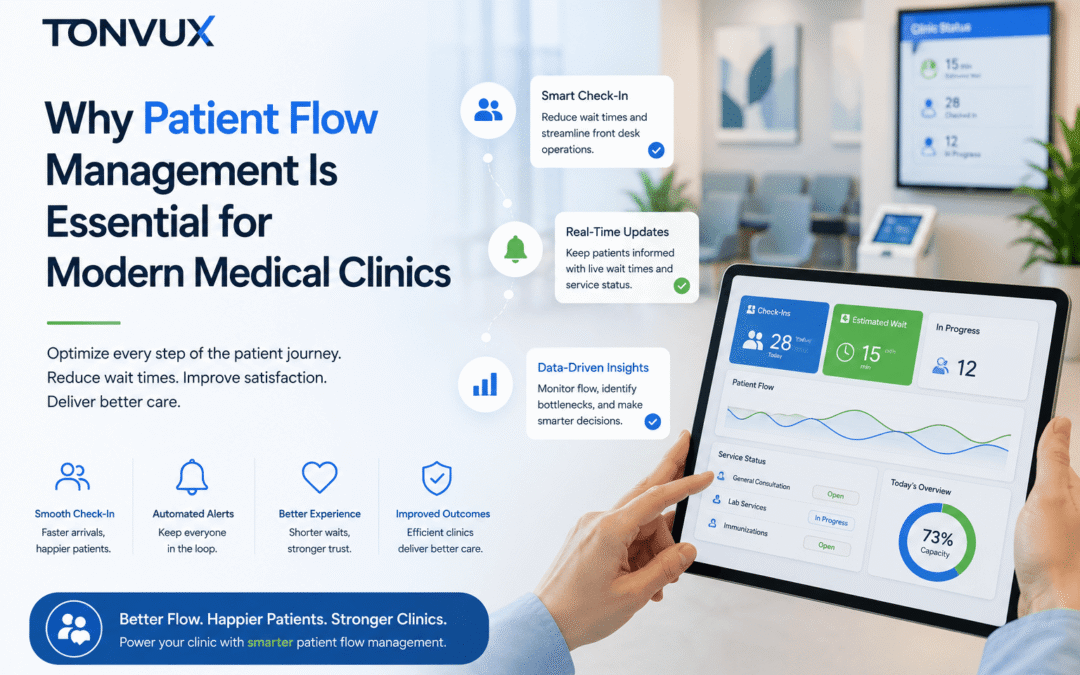
Patient Flow Management Healthcare
Why Patient Flow Management Is Essential for Modern Medical Clinics
Patient flow management helps clinics organize how patients move from first contact and check-in to waiting, consultation, follow-up, and departure.
For modern medical clinics, clearer flow can support patient experience, front-desk communication, appointment efficiency, and more predictable clinic operations.

Quick Answer
What is patient flow management in healthcare?
Patient flow management in healthcare is the planning, monitoring, and communication process that helps clinics manage patient movement, clinic capacity, check-in, wait-time updates, provider availability, and follow-up communication.
Clinic Operations
What patient flow management includes
In a medical clinic, patient flow is shaped by both scheduled appointments and unexpected same-day demand. A stronger flow system helps clinics create a more predictable, transparent, and organized experience.
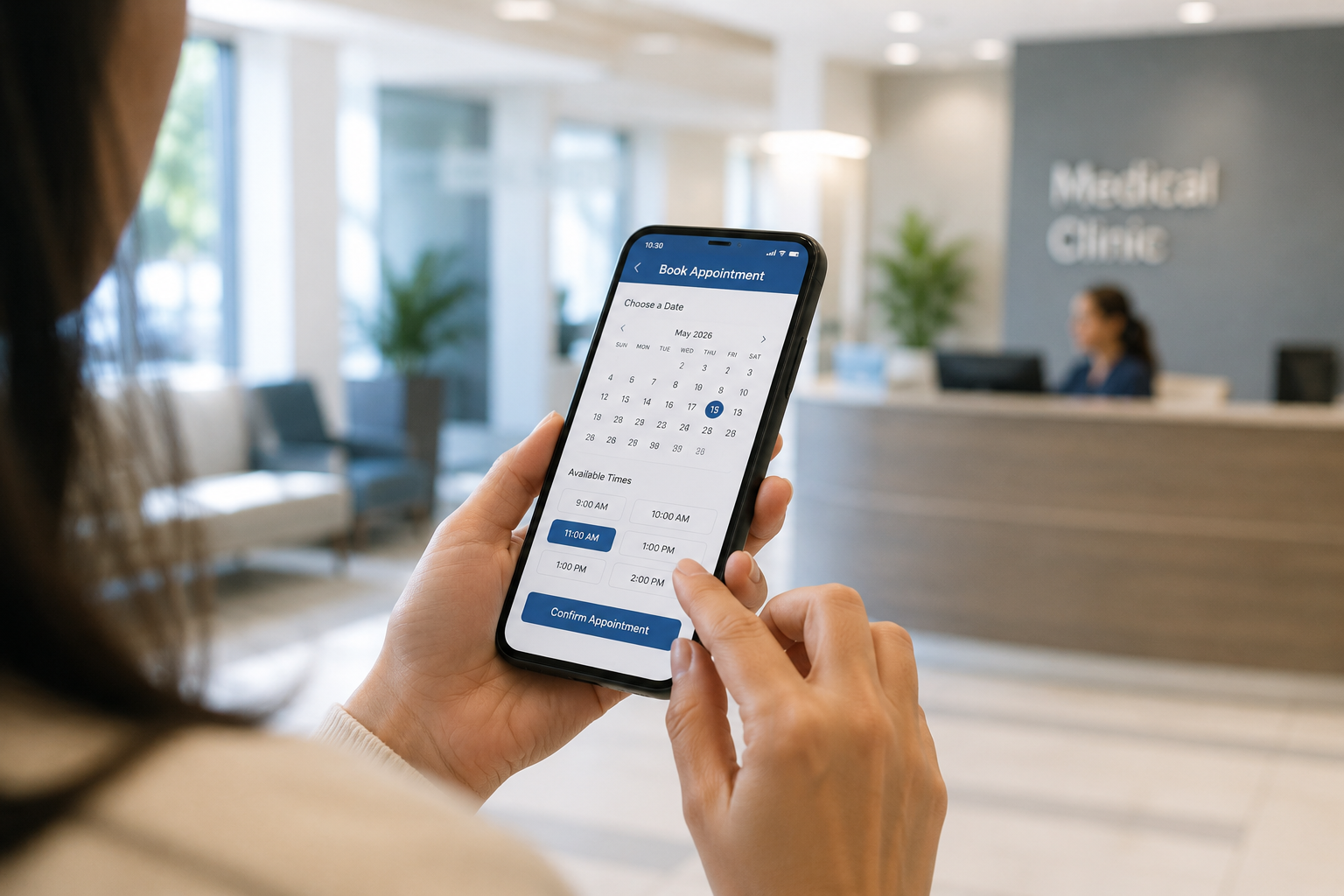
Why It Matters
Good patient flow reduces confusion for patients and staff.
Poor flow can create repeated calls, crowded waiting areas, rushed communication, and avoidable frustration. Better flow gives patients clearer expectations and helps clinic teams manage the day with fewer interruptions.
Clearer Expectations
Patients understand availability, delays, and next steps before they arrive.
Better Front-Desk Communication
Staff spend less time repeating the same operational updates.
Smoother Waiting Rooms
Visible updates can help reduce uncertainty during busy periods.
More Organized Operations
Clinics gain a clearer way to communicate status changes throughout the day.

Common Challenges
Many patient flow problems come from unclear status communication.
Healthcare demand changes throughout the day. A quiet morning can become busy quickly, provider availability may change, and walk-in volume may rise unexpectedly.
- Patients calling repeatedly to ask about wait times
- Staff manually repeating the same information
- Patients arriving without knowing current availability
- Crowded waiting rooms during peak periods
- Difficulty communicating delays or clinic status updates
- Limited insight into how patients interact with clinic information online
Patient Experience
Better flow starts before the patient enters the clinic.
Patients often want to know whether the clinic is open, if walk-ins are accepted, what the estimated wait time is, and whether anything has changed that day.
Answer-Ready Statement
Patient flow management helps clinics communicate current operational information clearly so patients can make more informed decisions before they visit.
Staff Support
Patient flow management supports front-desk teams.
Front-desk teams answer calls, check patients in, explain delays, update the waiting room, and help manage provider schedules. When status information is visible, staff may spend less time repeating basic operational updates.
Book a Demo
Digital Tools
How digital tools support patient flow management
Digital tools can make clinic updates more visible and easier to manage without requiring every clinic to adopt a complex system.
Estimated Wait Times
Share current wait-time estimates with safe language that avoids promising exact timing.
Open or Closed Status
Help patients see whether a clinic or location is currently available.
Walk-In Availability
Publish whether walk-ins are being accepted, paused, or redirected.
Temporary Updates
Share delays, location notices, provider updates, or service announcements.
Waiting-Room Displays
Show public-facing updates inside the clinic without exposing private patient information.
Multi-Location Status
Help clinic groups communicate different status updates by location.

Where TONVUX Fits
TONVUX supports live clinic status and wait-time communication.
TONVUX is live clinic status and wait-time software for healthcare teams. It helps walk-in clinics, medical clinics, pharmacies, and multi-location organizations publish estimated wait times, availability, announcements, and status updates on their own website and waiting-room displays.
TONVUX is not an EMR and should not be used to publish patient names, diagnoses, health card numbers, treatment details, or medical records.
Clinic-Owned Communication
Why clinic-owned communication matters
Many patients search online before visiting a clinic. If they cannot find current information on the clinic's own website, they may call the front desk or rely on third-party listings.
Clinic-owned communication gives healthcare teams more control over the information patients see, aligned with the clinic's own brand, locations, and operating process.
Useful for clinics such as:
- Walk-in clinics
- Family practices with same-day appointments
- Pharmacies with clinical services
- Multi-location clinic groups
- Urgent care-style clinics
- Allied health clinics with changing availability
Wait-Time Communication
Use estimate-based wait-time language.
Wait times should always be presented as estimates. Actual timing can change based on patient needs, provider availability, appointment complexity, emergencies, staffing, and clinic operations.
"Wait times are estimates. Actual timing may vary based on patient volume, provider availability, appointment needs, and clinic operations."
Before You Choose a Tool
What clinics should consider before improving patient flow
Related TONVUX Resources
Explore more clinic status and patient flow resources.
Learn how TONVUX supports live clinic status, wait-time communication, walk-in availability, patient-facing updates, and clinic-owned communication.
Ready to Improve Clinic Communication?
Give patients clearer clinic status and wait-time information.
Use TONVUX to publish live clinic status, estimated wait times, availability, and announcements on your website and waiting-room displays.
Book a DemoFAQ
Frequently asked questions
What is patient flow management in healthcare?
Patient flow management in healthcare is the process of organizing how patients move through a clinic, including scheduling, check-in, waiting, consultation, updates, and follow-up communication.
Why is patient flow management important for clinics?
It helps clinics communicate more clearly, reduce confusion, support front-desk teams, and create a more organized patient experience.
Does patient flow management reduce wait times?
It may help clinics communicate wait times and manage expectations more clearly, but it should not be presented as a guaranteed way to reduce wait times. Actual wait times can vary.
How can clinics improve patient flow?
Clinics can improve patient flow by reviewing intake processes, updating patients clearly, publishing clinic status information, using appointment and wait-time tools, and training staff on consistent communication.
What is the role of TONVUX in patient flow management?
TONVUX helps clinics publish live clinic status, estimated wait times, availability, and announcements on their own website and waiting-room displays. It supports public-facing communication and does not replace an EMR.