
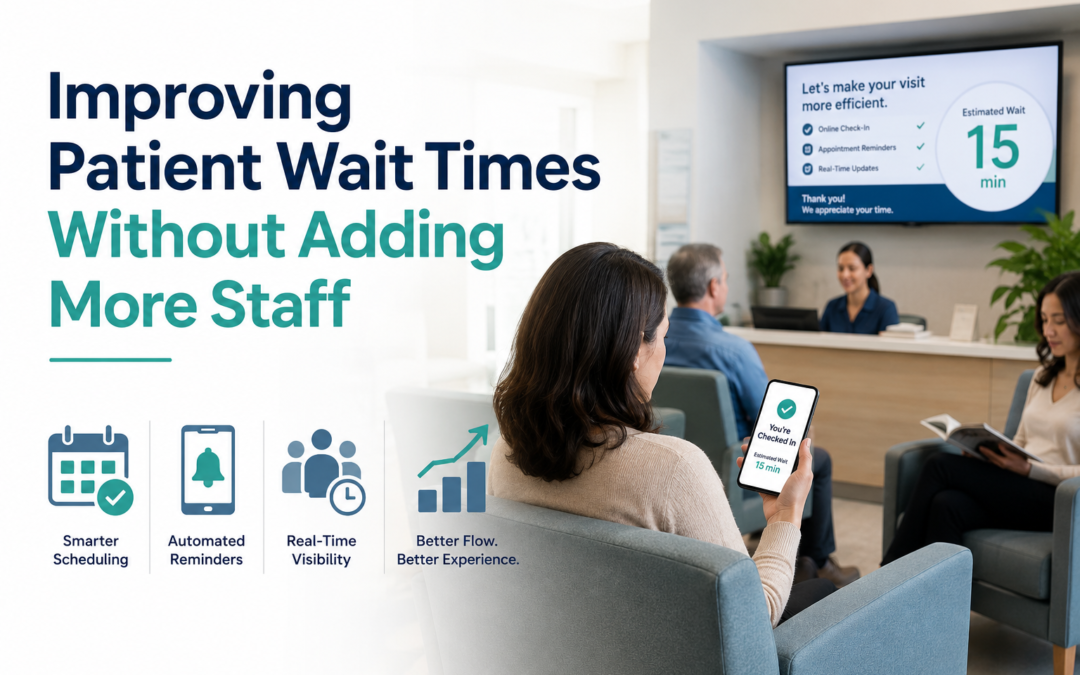
Improving Patient Wait Times
Improving Patient Wait Times Without Adding More Staff
For many clinics, improving patient wait times is a top operational priority. However, hiring additional physicians, nurses, or administrative staff is not always possible due to budget constraints, workforce shortages, or space limitations.
The good news is that reducing the perception of waiting and improving patient flow often starts with better communication, visibility, and workflow management, not necessarily more staff.
TONVUX helps clinics communicate estimated wait times, clinic status, provider availability, and announcements more clearly on their own website and waiting-room screens.
Why Patient Wait Times Matter
Long waits can affect both patient satisfaction and clinic operations.
When wait times are unclear, patients may:
- Leave before being seen
- Call the clinic repeatedly for updates
- Become frustrated with front-desk staff
- Post negative online reviews
- Choose another clinic for future visits
For clinics, unclear wait times can create additional administrative work and increase pressure on reception teams already managing a busy schedule.
The Difference Between Actual Wait Time and Perceived Wait Time
One of the most important concepts in improving patient wait times is understanding that patients experience two different types of waiting.
Actual Wait Time
The real amount of time between arrival and being seen by a provider.
Perceived Wait Time
How long the wait feels to the patient.
Research across healthcare and service industries consistently shows that uncertainty makes waits feel longer. A patient who expects a 45-minute wait is often more satisfied than a patient who waits 30 minutes without receiving any updates.
1. Display Estimated Wait Times
One of the simplest ways to improve the patient experience is by showing estimated wait times.
Patients want answers to questions such as:
- How busy is the clinic?
- Should I come now or later?
- Is the wait manageable today?
- Will I still be seen before closing?
Displaying estimated wait times on a clinic website or waiting-room screen helps patients make informed decisions before they arrive. Wait times should always be presented as estimates because actual timing can change throughout the day.
Learn more about the TONVUX Wait Time Widget for showing clinic wait-time information online.
2. Communicate Clinic Status Clearly
Many patient delays begin before the patient even enters the clinic.
Patients often call to ask:
- Are you open?
- Are walk-ins accepted?
- Is the clinic at capacity?
- Is a provider available?
Providing real-time clinic status updates online can help reduce uncertainty and unnecessary phone calls.
Examples include:
- Walk-ins currently accepted
- Walk-ins temporarily limited
- Clinic open
- Provider unavailable today
- Clinic closing early
- Please check back later
See how TONVUX Status helps clinics share public-facing status updates.
3. Reduce Front Desk Interruptions
Reception teams often spend a significant portion of the day answering repetitive questions about wait times and availability.
Every interruption can slow down check-in workflows, patient registration, and administrative tasks.
When common questions are answered through website updates, waiting-room displays, and clinic announcements, staff can spend more time supporting patients who need direct assistance.
4. Keep Patients Updated During the Wait
One of the biggest causes of frustration is silence.
Patients waiting for extended periods often wonder:
- Has my name been missed?
- Is the clinic running behind?
- How much longer will it be?
Even simple updates can help reduce anxiety and improve the waiting experience.
Examples include:
- Estimated wait time updated to 60 minutes
- Provider delayed due to emergency patient care
- Additional provider arriving shortly
- Clinic currently experiencing higher-than-normal volume
Transparency often improves patient satisfaction even when delays cannot be avoided.
5. Use Waiting Room Screens Effectively
Waiting-room displays can become a valuable communication tool.
Instead of leaving patients with no information, clinics can use screens to share:
- Current wait times
- Clinic announcements
- Availability updates
- General patient reminders
- Arrival instructions
- Holiday schedules
This helps create a more informed waiting experience without requiring additional staff involvement. See how TONVUX Kiosk supports waiting-room communication.
6. Improve Multi-Location Visibility
For clinic groups with multiple locations, patients often choose the first clinic they find online.
However, another nearby location may have:
- Shorter wait times
- More provider availability
- Greater walk-in capacity
Showing location-specific status information can help distribute patient volume more effectively across multiple sites.
7. Analyze Patient Traffic Patterns
Understanding when clinics experience peak demand can help improve operational planning.
Reviewing trends such as:
- Busiest days
- Peak arrival times
- Wait-time patterns
- Location activity
- Patient engagement with status updates
can help managers identify opportunities to improve patient flow without necessarily increasing staffing levels.
Operational analytics should support workflow planning and should not be treated as clinical decision-making tools. Visit the TONVUX Analytics Dashboard page to learn more.
Technology Can Help Improve Patient Wait Times
Many clinics assume the only solution to long waits is hiring additional staff. While staffing is important, communication and visibility often have a significant impact on patient experience.
Tools such as TONVUX help clinics publish:
- Estimated wait times
- Walk-in availability
- Provider status
- Clinic announcements
- Location-specific updates
- Waiting-room messages
These updates can be managed from one clinic-owned platform and shown on the website, status views, and kiosk screens. For walk-in-specific workflows, see Wait Time Software for Walk-In Clinics.
Focus on Better Communication First
Improving patient wait times is not always about making waits shorter. Often, it starts by making waits more predictable and easier to understand.
When patients receive clear information about wait times, clinic status, and availability, they can make more informed decisions and experience less uncertainty throughout their visit.
For clinics looking to improve patient communication, reduce repetitive questions, and create a better waiting experience, clearer visibility may be one of the most practical places to start.
Improve Patient Wait-Time Communication
TONVUX helps clinics publish estimated wait times, walk-in availability, provider status, clinic announcements, location-specific updates, and waiting-room messages from one clinic-owned platform.
Request Early Access
Call (587) 998-0919
Email [email protected]
FAQ
What does improving patient wait times mean?
Improving patient wait times can involve reducing actual wait times, improving patient flow, setting clearer expectations, and helping patients better understand delays.
Can clinics improve wait times without hiring more staff?
In some cases, yes. Better communication, improved workflow visibility, wait-time updates, and operational planning can help improve the patient experience without immediately increasing staffing levels.
Why do patients become frustrated with long waits?
Patients often become frustrated when they do not know how long the wait will be or why delays are occurring. Uncertainty can make waiting feel longer than it actually is.
Do wait-time displays improve patient satisfaction?
Displaying estimated wait times may help patients set realistic expectations and reduce uncertainty. Results vary by clinic and patient population.
How can clinics communicate wait times more effectively?
Clinics can use website updates, waiting-room screens, announcements, and status displays to provide patients with current information about wait times and availability.
Can multi-location clinics reduce wait times?
Multi-location clinics may improve patient distribution by showing location-specific availability and wait-time information, allowing patients to choose the most appropriate site.
Is patient communication part of improving patient wait times?
Yes. Clear communication is often an important part of improving the overall patient experience, even when actual wait times cannot be significantly reduced.